
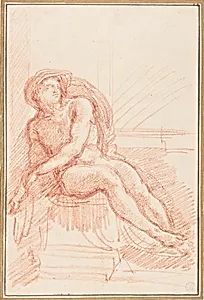
Ignudo from Sistine Chapel ceiling
Classification
figures
Department
Smithsonian Collection
Museum
Smithsonian American Art Museum
Credit
Gift of Noah Butkin
Accession Number
1977-110-1-31
Rights
Public Domain
About this artwork
Research in Progress
Art Historical Context
Visitors to the Smithsonian American Art Museum are invited to admire *Ignudo from Sistine Ceiling*, a captivating figure study by Jean-Robert Ango, a artist active in Rome from1759 to 1770. Created around 1759–70, this work captures one of the iconic nude male figures—known as *ignudi*—from Michelangelo's monumental Sistine Chapel frescoes1508–1512). Ango's rendition reflects the 18th-century fascination with masterpieces, as European artists flocked to Rome during the Grand Tour era to sketch and copy antiquity's glories. These athletic *ignudi* in Michelangelo's ceiling symbolize the nobility of the human form, bridging pagan vigor and Christian divinity amid scenes from Genesis. Ango, working in the Eternal City shortly before his death in 1773, channeled this High Renaissance ideal into his own composition, showcasing the enduring influence of Michelangelo on later generations. Though the medium remains under study ("Research in Progress"), the piece exemplifies neoclassical homage to classical anatomy and proportion. A generous gift from Noah Butkin, this artwork enriches the Smithsonian's collection of figurative studies, offering a window into cross-cultural artistic exchange. Pause here to ponder how one artist's gaze across centuries revives the timeless beauty of the nude.