
Imperial Portrait
Unknown Artist
19th century
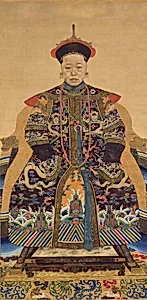
Medium
Hanging scroll; ink and color on silk
Dimensions
Image: 67 1/2 × 33 1/2 in. (171.5 × 85.1 cm) Overall with mounting: 9 ft. 1 in. × 41 1/8 in. (276.9 × 104.5 cm) Overall with knobs: 9 ft. 1 in. × 45 1/4 in. (276.9 × 114.9 cm)
Classification
Paintings
Culture & Period
China · Qing dynasty (1644–1911)
Department
Asian Art
Museum
Metropolitan Museum of Art, New York, NY
Credit
Rogers Fund, 1942
Accession Number
42.141.6
Rights
Public Domain
Tags
Art Historical Context
This stunning *Imperial Portrait*, a 19th-century hanging from China's Qing dynasty (16441911), captures the regal poise of a high-ranking woman, likely an empress or consort adorned with imperial dragons that symbolize supreme authority and divine power. Created by an unknown artist using ink and color on silk the painting exemplifies the refined court style of the era, where meticulous brushwork conveyed status through elaborate robes, jewelry, and symbolic motifs. Dragons, traditionally associated with the emperor, underscore her elevated position within the imperial hierarchy. Hanging scrolls like this were not everyday decor but ceremonial treasures, unrolled for admiration during palace rituals or scholarly gatherings. The generous dimensions—over nine feet tall when fully mounted—allowed it to dominate a space, immersing viewers in the grandeur of Qing imperial life. Silk's luminous surface enhanced the vibrant colors and fluid ink lines, a technique perfected over centuries in Chinese painting traditions. Acquired through the Rogers Fund in 1942 and housed in the Metropolitan Museum of Art's Asian Art department, this portrait offers a window into the opulent world of China's last dynasty, blending artistry with political symbolism for an enduring legacy.