
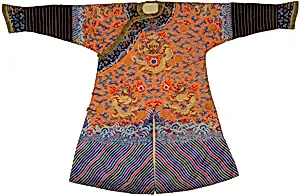
Imperial Robe
Unknown Artist
mid-19th century
Medium
Silk
Dimensions
48 x 76 1/2 in. (121.92 x 194.31 cm)
Classification
Costumes-Embroidered
Culture & Period
China · Qing dynasty (1644–1911)
Department
Asian Art
Museum
Metropolitan Museum of Art, New York, NY
Credit
Bequest of Mrs. James W. Gerard, 1956
Accession Number
56.210.1
Rights
Public Domain
Tags
Art Historical Context
Step into the grandeur of China's Qing dynasty (1644–1911) with this stunning *Imperial Robe*, a mid-19th-century masterpiece of silk embroidery now housed in the Metropolitan Museum of Art's Asian Art Department. Measuring an impressive 48 x 76½ inches (121.92 x 194.31 cm), this robe was crafted for wear by the highest echelons of imperial society, its flowing form designed for ceremonial occasions that underscored the emperor's divine mandate to rule. The robe's silk medium, exquisitely embroidered, exemplifies Qing textile artistry, where intricate stitching brought to life motifs like majestic dragons—symbols of imperial power, strength, and good fortune. In Chinese culture, these dragons, often depicted with five claws, were reserved exclusively for the emperor and his closest kin, making the garment a profound emblem of hierarchy and celestial authority. Such robes blended functionality with opulence, their vibrant threads catching the light during palace rituals. Bequeathed to the Met in 1956 by Mrs. James W. Gerard, this unknown artist's creation offers a tangible link to the twilight of the Qing era, inviting us to marvel at the fusion of craft, symbolism, and imperial splendor.