
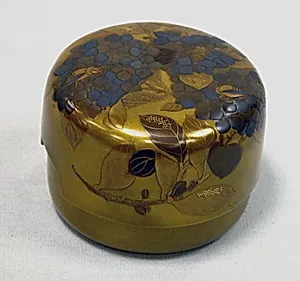
Incense box with hydrangea and bee
Unknown Artist
second half of 19th century
Medium
Gold, silver hiramaki-e, takamaki-e, cut-out gold foil application on gold ground
Dimensions
H. 2 1/2 in. (6.4 cm); Diam. 3 in. (7.6 cm)
Classification
Lacquer
Culture & Period
Japan · Meiji period (1868–1912)
Department
Asian Art
Museum
Metropolitan Museum of Art, New York, NY
Credit
The Howard Mansfield Collection, Purchase, Rogers Fund, 1936
Accession Number
36.100.156a, b
Rights
Public Domain
Tags
Art Historical Context
This exquisite incense box, titled *Incense Box with Hydrangea and*, hails from Japan's Meiji period (1868–1912), a time of profound transformation as the nation modernized while preserving its masterful artisanal traditions. Crafted an unknown artist in the half of the 19 century, this small lacquer treasure—measuring just 2½ inches high and 3 inches in diameter—was designed for storing fragrant incense, often used in tea ceremonies, religious rituals, or personal grooming. Its gold ground shimmers with delicate depictions of hydrangea flowers, leaves, and a bee, evoking the fleeting beauty of summer in Japanese aesthetics. The box showcases advanced lacquer techniques that elevated Japanese craftsmanship to world-renowned status. Hiramaki-e (flat sprinkled gold or silver powder) and takamaki-e (raised sprinkled designs) create textured depth, while cut-out gold foil adds luminous highlights. These maki-e methods, refined over centuries, demanded immense skill and patience, with layers of lacquer applied, powdered, and polished repeatedly. During the Meiji era, such works symbolized cultural refinement amid Japan's opening to the West, often admired by international collectors. Part of The Howard Mansfield Collection at The Metropolitan Museum of Art (acquired via Rogers Fund in 1936), this piece invites visitors to marvel at the intricate harmony of nature and artistry, a testament to Japan's enduring legacy in lacquerware.