
Incense Burner
Unknown Artist
13th century
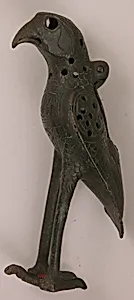
Medium
Brass; cast, incised, and pierced
Dimensions
H. 4 7/8 in. (12.4 cm) W. 2 in. (5.1 cm) D. 1 7/8 in. (4.8 cm) Wt. 4.5 oz. (127.6 g)
Classification
Metal
Department
Islamic Art
Museum
Metropolitan Museum of Art, New York, NY
Credit
Bequest of Charles K. Wilkinson, 1986
Accession Number
1987.355.2
Rights
Public Domain
Tags
Art Historical Context
This exquisite 13th-century incense, crafted from brass through casting, incising, and piercing, the masterful metalworking traditions of the Islamic world. just under 5 inches tall and weighing a mere 4.5 ounces, its compact form—likely adorned with bird motifs—made it perfectly portable for personal or household use. The intricate piercing allowed fragrant smoke to waft through decorative openings, blending functionality with artistry, while incised details added fine textures and patterns. In medieval Islamic society, incense burners like this were essential for daily rituals, perfuming homes, mosques, and public spaces during prayer, hospitality, or celebrations. Spices such as frankincense symbolized purity and divine presence, reflecting the culture's deep appreciation for sensory experiences and refined craftsmanship. Brass, durable yet malleable, was a favored medium for such objects, enabling artisans to create lightweight, ornate pieces that showcased technical virtuosity. Today, this rare survivor graces the Metropolitan Museum of Art's Islamic Art collection, thanks to the 1986 bequest of Charles K. Wilkinson. It invites us to imagine the aromatic haze of a 13th-century gathering, where beauty and scent intertwined in everyday life.