
Incense Burner
Unknown Artist
19th century
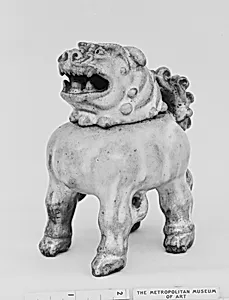
Medium
Clay covered with a transparent glaze clouded with white (Kiyomizu ware)
Dimensions
H. 4 5/8 in. (11.7 cm)
Classification
Ceramics
Culture & Period
Japan · Edo (1615–1868) or Meiji period (1868–1912)
Department
Asian Art
Museum
Metropolitan Museum of Art, New York, NY
Credit
Gift of Mr. and Mrs. Samuel Colman, 1893
Accession Number
93.1.199a, b
Rights
Public Domain
Tags
Art Historical Context
This delicate incense burner, crafted by an unknown Japanese artist in the 19th century, exemplifies the refined artistry of Kiyomizu ware—a renowned ceramic style from Kyoto's Kiyomizu district. Standing just 4 5/8 inches (11.7 cm) tall, it is formed from clay coated with a transparent glaze artfully clouded with white, creating a soft, ethereal glow that enhances its subtle elegance. Lion motifs, a common protective symbol in Japanese art known as *shishi* or guardian lions, likely adorn its surface, evoking strength and warding off evil spirits. Dating to the late Edo period (1615–1868) or early Meiji era (1868–1912), this piece captures Japan's cultural transition from isolationist feudalism to modernization. Kiyomizu ware, prized for its technical innovation in glazes and forms, was popular for domestic and ritual objects, blending functionality with aesthetic beauty. Incense burners like this were essential in tea ceremonies, Buddhist practices, and home altars, where fragrant smoke rose as offerings to honor ancestors or deities. Today, this treasure resides in the Metropolitan Museum of Art's Asian Art Department, a generous 1893 gift from Mr. and Mrs. Samuel Colman. It invites us to appreciate the quiet poetry of everyday Japanese ceramics, where form, symbolism, and craftsmanship converge.