
Incense Burner
1750
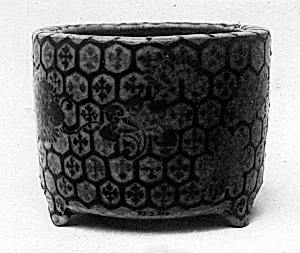
Medium
Clay covered with a crackled transparent glaze and decorated with colored enamels and gold (Kyoto ware)
Dimensions
H. 2 1/8 in. (5.4 cm); Diam. 2 3/4 in. (7 cm)
Classification
Ceramics
Culture & Period
Japan · Edo period (1615–1868)
Department
Asian Art
Museum
Metropolitan Museum of Art, New York, NY
Credit
Gift of Charles Stewart Smith, 1893
Accession Number
93.3.213
Rights
Public Domain
Art Historical Context
This exquisite incense burner, crafted by the Kyoto potter Kinkozan in 1750 during Japan’s Edo period, the refined elegance of Kyoto ware ceramics. Standing just over two inches tall, the small vessel features a clay body coated in a delicate crackled transparent glaze, then adorned with vibrant colored enamels and touches of gold. Such pieces were prized for their intimate scale and harmonious blend of utility and ornament, reflecting the sophisticated tastes of the era’s merchant and samurai classes. In the peaceful Edo period, Kyoto emerged as a center for innovative ceramic production, where artisans combined traditional techniques with influences from Chinese and Korean wares. The crackled glaze and overglaze enamels highlight the technical mastery involved, creating a luminous surface that catches light beautifully. These burners played a meaningful role in daily rituals, from tea ceremonies to household altars, underscoring the deep cultural integration of art into Japanese spiritual and social life. Acquired by the Metropolitan Museum through a generous gift in 1893, this work offers modern visitors a window into Japan’s rich ceramic heritage and the enduring appeal of its decorative arts.
About the Artist
Kinkozan
**Kinkozan** refers to the renowned Kinkōzan family workshop of Kyoto potters, active from 1645 until its closure around 1927. Originally known under the Kobayashi family name, the workshop received the Kinkozan designation in the 18th century from the Tokugawa shogunate. It specialized in Satsuma ware, particularly the elaborately decorated Kyoto (Kyō-Satsuma) style featuring ivory-bodied earthen...