
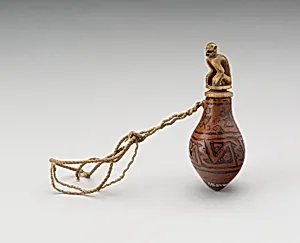
Incised Container for Lime with Monkey Stopper
1000–1470
Medium
Gourd with string [and bone stopper]
Dimensions
H.: 6.4 cm (2 1/2 in.)
Classification
fauna/flora/fruit
Department
Arts of the Americas
Museum
Art Institute of Chicago
Accession Number
91756
Rights
Public Domain
Art Historical Context
This charming incised container for lime, crafted by an artist from the Ica culture in ancient Peru (ca. 1000–1470), exemplifies the ingenuity of pre-Columbian Andean. Fashioned from a dried gourd—a versatile natural material abundant in the region—the vessel stands just 6.4 cm tall, making it perfectly portable. It features intricate incisions, or carved lines, etched into the surface for decoration, paired with a whimsical bone stopper shaped like a monkey and secured by string. Housed in the Art Institute of Chicago's Arts of the Americas collection and classified under fauna, flora, and fruit motifs, it highlights the seamless integration of nature into daily life. In Ica Valley society, during Peru's Late Intermediate Period, such containers held powdered lime essential for chewing coca leaves—a widespread practice among farmers, warriors, and elites for stamina, appetite suppression, and ritual purposes. The lime activated the coca's alkaloids, fostering social bonds and spiritual connections. This functional object thus carried deep cultural weight, bridging utility and symbolism. The monkey stopper adds playful flair, possibly evoking trickster figures in Andean lore or local wildlife, while the incising technique reveals skilled craftsmanship without advanced tools. As a survivor of everyday use, it offers museum visitors a tangible glimpse into Ica ingenuity, where humble gourds became vessels of beauty and tradition.