
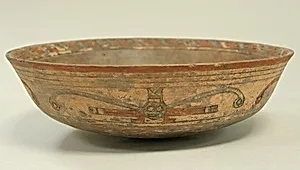
Incised Painted Bowl
Unknown Artist
5th–2nd century BCE
Medium
Ceramic, pigment
Dimensions
H. 2 1/2 × Diam. 8 3/8 in. (6.4 × 21.3 cm)
Classification
Ceramics-Containers
Culture
Paracas
Department
Arts of Africa, Oceania, and the Americas
Museum
Metropolitan Museum of Art, New York, NY
Credit
Gift of Mr. and Mrs. Nathan Cummings, 1964
Accession Number
64.228.166
Rights
Public Domain
Art Historical Context
This exquisite Incised Painted Bowl hails from the Paracas culture of ancient Peru, dating to the 5th–2nd century BCE. Crafted ceramic and adorned with pigment, it measures a modest 2½ inches high and 8⅜ inches in diameter, making it a perfect example of the finely tuned pottery produced by this Pre-Columbian society along Peru's southern coast. Donated to the Metropolitan Museum of Art in 1964 by Mr. and Mrs. Nathan Cummings, now resides in the Department of Arts of Africa,, and the Americas. acas artisans excelled in combining incision and painting techniques: lines were meticulously carved into the clay's surface before firing, creating textured patterns, then vibrant pigments were applied post-firing for bold colors that have endured millennia. This method highlights their mastery of ceramic production, blending functionality as a container with artistic expression—likely used for serving food, liquids, or ritual purposes. The bowl embodies the Paracas' rich cultural legacy, a society renowned for elaborate textiles and mummification practices, where ceramics often featured symbolic motifs reflecting their worldview. Though the artist remains unknown, such vessels offer a window into daily and ceremonial life in one of Peru's earliest complex cultures, bridging the gap between utility and profound aesthetic innovation.