
Ink Tablet with "The Nine Sons" Design
late 19th–early 20th century
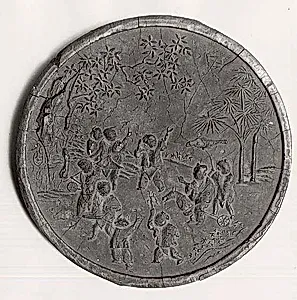
Medium
Ink
Dimensions
Diam. 34 3/4 in. (88.3 cm)
Classification
Ink
Culture & Period
China · late Qing dynasty (1644–1911) or early Republic period (1912–49)
Department
Asian Art
Museum
Metropolitan Museum of Art, New York, NY
Credit
Rogers Fund, 1930
Accession Number
30.76.200
Rights
Public Domain
Art Historical Context
This impressive ink tablet, created by Chinese artist Wen Ya Guo during the late Qing dynasty or early Republic period, exemplifies the refined tradition of molded ink production in China. Measuring over 34 inches in diameter, it was crafted from solid ink—a medium essential to calligraphy and painting—where blocks were formed by mixing soot with animal glue and then stamped with intricate designs. Such large-scale tablets often served both practical and decorative purposes, reflecting the high regard for scholarly arts during this transitional era in Chinese history. The central motif of "The Nine Sons" draws from longstanding Chinese mythology, depicting the offspring of the dragon, each embodying distinct traits and attributes. This theme, popular in decorative arts, underscores cultural values of diversity, strength, and imperial symbolism. Wen Ya Guo’s work highlights the technical mastery involved in carving detailed molds that captured these mythical figures with precision and elegance. Acquired by the Metropolitan Museum of Art through the Rogers Fund in 1930, the tablet offers visitors a glimpse into the enduring artistic heritage of Asian ink traditions, where functionality meets profound cultural storytelling.