
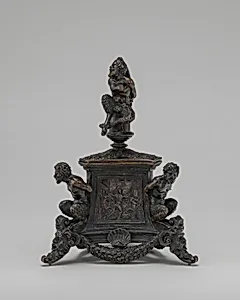
Inkstand with Bound Satyrs and Three Labors of Hercules
c. 1530/1540
Medium
bronze
Dimensions
overall: 24.9 x 19 x 16 cm (9 13/16 x 7 1/2 x 6 5/16 in.)
Classification
Sculpture
Department
CSD
Museum
National Gallery of Art, Washington, D.C.
Credit
Widener Collection
Accession Number
1942.9.140
Rights
Public Domain
Art Historical Context
This exquisite bronze inkstand crafted in northern Italy around1530–154, exemplifies the Renaissance fascination with classical mythology and the elevation of everyday objects into works of art. Created by an anonymous North Italian sculptor, the piece served a practical purpose as a writing accessory while showcasing intricate narrative decoration. Its compact form, measuring just under ten inches tall, would have graced the desk of a scholar or noble patron, blending utility with intellectual display. The design features bound satyrs—mythical half-human, half-goat creatures—alongside scenes from three of Hercules’s labors, symbolizing the triumph of reason and strength over primal forces. Bronze, prized during this era for its durability and ability to capture fine details through lost-wax casting, allowed the artist to render dynamic poses and expressive faces with remarkable vitality. Such objects reflect the period’s humanist ideals, drawing on ancient Roman and Greek stories to convey moral lessons about virtue and control. Part of the Widener Collection at the National Gallery of Art, this inkstand highlights how Renaissance artisans transformed functional items into miniature theaters of myth, inviting contemplation amid daily tasks.