
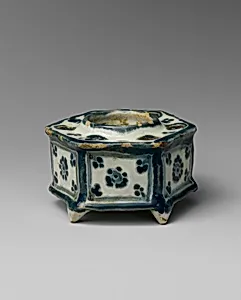
Inkwell
Unknown Artist
ca. 1750
Medium
Tin-glazed earthenware
Dimensions
Diam. 4 in. (10.2 cm)
Classification
Inkwell
Culture
Mexican
Department
The American Wing
Museum
Metropolitan Museum of Art, New York, NY
Credit
Gift of Mrs. Robert W. de Forest, 1917
Accession Number
17.108.28
Rights
Public Domain
Art Historical Context
This charming inkwell, crafted around 1750 in Mexico, exemplifies the everyday artistry of colonial-era ceramics. Made of tin-glazed earthenware technique where a tin oxide coating creates a glossy, white surface ideal for vibrant painted decorations—this small vessel (just 4 inches in diameter would have served practical purposes in homes or offices, holding ink for quills during an age of handwritten correspondence. Tin-glazing, introduced to Mexico via Spanish colonizers from Islamic and European traditions, flourished in New Spain's pottery centers like Puebla and Mexico City. Mexican potters adapted it into colorful maiolica styles, blending indigenous motifs with European designs, making functional objects like this inkwell both utilitarian and decorative. Its survival highlights the durability of earthenware despite daily use. Now in the Metropolitan Museum of Art's American Wing—thanks to a 1917 gift from Mrs. Robert W. de Forest—this piece bridges Mexican craftsmanship with broader colonial American narratives, reminding us how trade and cultural exchange shaped the Americas in the 18th century. A delightful glimpse into pre-industrial life!