
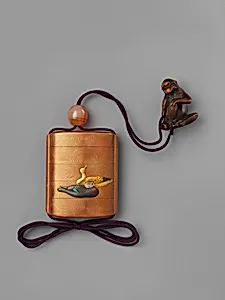
Inrō with Ducks on Swirls
19th century
Medium
Gold hiramaki-e, takamaki-e, cut-out gold foil application and mother-of-pearl inlay on red lacquer ground; Inside: Nashiji and fundame
Dimensions
H. 2 13/16 in. (7.2 cm); W. 2 3/8 in. (6 cm); D. 13/16 in. (2.1 cm)
Classification
Inrō
Culture & Period
Japan · Meiji period (1868–1912)
Department
Asian Art
Museum
Metropolitan Museum of Art, New York, NY
Credit
Edward C. Moore Collection, Bequest of Edward C. Moore, 1891
Accession Number
91.1.684
Rights
Public Domain
Tags
Art Historical Context
Behold the exquisite *Inrō with Ducks Swirls* by the skilled lacquer artist Tōyō, crafted during Japan's Meiji period (186–1912). This treasure, measuring just 2 13/16 inches tall, exemplifies the refined artistry of Japanese inrō—small, tiered lacquer boxes worn from the belt via a netsuke and ojime bead. Popular among samurai and merchants in the 19th century, inrō served as portable cases for seals, medicines, or tobacco, blending functionality with opulent decoration. Tōyō's mastery shines in the intricate techniques: a vibrant red lacquer ground adorned with hiramaki-e (flat gold powder sprinkling), takamaki-e (raised gold designs), cut-out gold foil, and shimmering mother-of-pearl inlays depicting playful ducks amid swirling motifs. The interior features nashiji (a pearlescent gold fleck ground) and fundame (a foundational layer of metal powders), showcasing the labor-intensive urushi lacquer process perfected over centuries. Ducks, symbols of marital fidelity and good fortune in Japanese culture, evoke harmony and nature's grace. Part of the Metropolitan Museum of Art's Edward C. Moore Collection (bequest 1891), this piece highlights Meiji-era lacquerware's global appeal, bridging traditional craftsmanship with emerging export markets. A testament to Japan's artistic ingenuity, it invites us to appreciate the delicate beauty hidden in everyday elegance.