
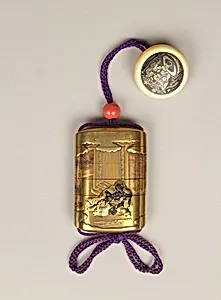
日本武尊蒔絵印籠|Inrō with Prince Yamato Takeru Disguised as a Woman
1752, 8th month
Medium
Five cases; lacquered wood with gold, silver takamaki-e, hiramaki-e, and cut-out gold foil application on gold ground Netsuke: kagamibuta type, Ono no Tōfū; ivory and metal Ojime: red coral bead
Dimensions
3 1/4 x 2 1/4 x 13/16 in. (8.3 x 5.7 x 2.1 cm)
Classification
Inrō
Culture & Period
Japan · Edo period (1615–1868)
Department
Asian Art
Museum
Metropolitan Museum of Art, New York, NY
Credit
Bequest of Benjamin Altman, 1913
Accession Number
14.40.874a, b
Rights
Public Domain
Tags
Art Historical Context
This exquisite inrō from Japan’s Edo period (1615–1868 captures a dramatic moment from ancient legend Prince Yamato Takeru, heroic figure from Japanese mythology, disguised as a to infiltrate an enemy camp. Created in 1752 by the artist Bairin (also known asomasa), the five container was designed to hold small or medicines and was worn from a sash by its ivory netsuke coral ojime bead. scene reflects the period’s fascination with historical tales and the refined tastes of samurai and merchants alike. The artwork showcases masterful lacquer techniques on a gold ground, including raised takamaki-e, flat hiramaki-e, and delicate cut-out gold foil. These layered methods create depth and intricate detail, allowing the figures of men and women—some bearing swords—to emerge with remarkable clarity. Such inrō were both practical accessories and status symbols, blending utility with storytelling. Today housed at The Metropolitan Museum of Art, this piece highlights the sophisticated artistry of 18th-century Japan, where everyday objects became canvases for myth and craftsmanship.
About the Artist
Bairin|Naomasa ( | ) · | – |
|