
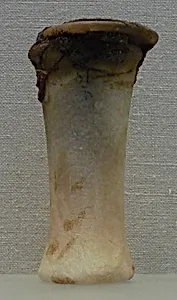
Inscribed Ointment Jar From Foundation Deposit 2 of Hatshepsut's Valley Temple
Unknown Artist
ca. 1479–1458 B.C.
Medium
Travertine (Egyptian alabaster), linen
Dimensions
h. 10.5 cm (4 1/8 in)
Classification
Jar, ointment
Period
New Kingdom
Department
Egyptian Art
Museum
Metropolitan Museum of Art, New York, NY
Credit
Rogers Fund, 1916
Accession Number
16.10.481
Rights
Public Domain
Art Historical Context
This delicate inscribed ointment jar, unearthed from Foundation Deposit 2 at Hatshepsut's Temple, offers a fascinating glimpse into ancient Egyptian royal rituals. Dating to around 1479–1458 B.C. during Dynasty 18 of the New, it comes from the reign of Hatshepsut, one of Egypt's most powerful female pharaohs. Foundation deposits like this were ritually buried beneath temple corners to ensure divine protection and prosperity for the structure—small treasures symbolizing the king's eternal bond with the gods. Crafted from travertine, known as Egyptian alabaster for its creamy translucency and soft carvability, the jar stands just 10.5 cm tall, perfect for holding precious oils or ointments used in temple ceremonies. A linen element likely served as a seal or plug, highlighting the Egyptians' mastery of combining stone and organic materials for practical yet sacred vessels. The inscriptions, typically bearing the royal cartouche, affirmed Hatshepsut's legitimacy and piety, blending artistry with propaganda. Today, this artifact graces the Metropolitan Museum of Art's Egyptian Art collection, acquired through the Rogers Fund in 1916. It reminds us how everyday objects became conduits for immortality in a civilization obsessed with the afterlife.