
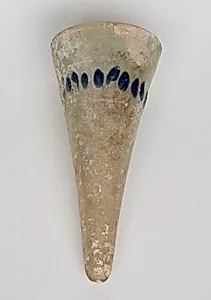
Conical Lamp
275–300
Medium
Glass
Dimensions
14.6 × 6.4 × 6.4 cm (5 3/4 × 2 1/2 × 2 1/2 in.)
Classification
lamp (lighting device)
Department
Arts of Greece, Rome, and Byzantium
Museum
Art Institute of Chicago
Accession Number
67398
Rights
Public Domain
About this artwork
This lamp was meant to be suspended from polykandela, or chandeliers, which hung from the ceiling. The early Byzantines, like the Romans before them, typically burned olive oil for light. Lamps made from glass such as this were more expensive than the numerous surviving terracotta examples, and they were likely used to light the most important part of a church, such as, the altar or the nave. Keeping the lamps lit was costly, and generous donors gave endowments to churches to literally keep the ...
About the Artist
Ancient Roman
The artists attributed to "Ancient Roman" in museum collections represent the anonymous craftsmen who produced the vast output of sculpture, frescoes, mosaics, and reliefs defining Roman visual culture from the Republic (c. 509–27 BCE) to the late Empire (c. 395 CE). Individual identities remain elusive, as Roman makers were typically viewed as skilled tradesmen—often enslaved Greeks or provincial...