
Insertion
Unknown Artist
16th century
Medium
Bobbin lace
Dimensions
L. 7 x W. 3/4 inches (17.8 x 1.9 cm)
Classification
Textiles-Laces
Culture
Italian, Venice
Department
European Sculpture and Decorative Arts
Museum
Metropolitan Museum of Art, New York, NY
Credit
Rogers Fund, 1920
Accession Number
20.186.94
Rights
Public Domain
Art Historical Context
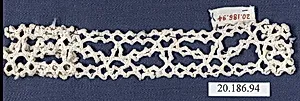
Nestled in the Metropolitan Museum of Art's European Sculpture and Decorative collection, *Insertion* is a delicate 16th-century bob lace strip from Venice, Italy, measuring just 7 by ¾ inches. Crafted by an unknown artist, this piece exemplifies the exquisite textile artistry of Renaissance Venice, a hub of luxury craftsmanship where lace became a symbol of wealth and refinement. Acquired through the Rogers Fund in 0, it invites visitors to marvel at the precision required to create such finery. Bobbin lace, the medium here, involved twisting and intertwining fine silk or linen threads using small bobbins—wooden spools that allowed lacemakers to manipulate patterns with remarkable complexity. Venetian lacemakers pioneered intricate geometric and floral motifs, often seen in insertions like this one, which were sewn into garments, linens, or collars to add elegance and status. In the 16th century, lace was a booming export, adorning nobility across Europe and reflecting Venice's dominance in the decorative arts trade. This tiny treasure highlights the unsung skill of anonymous artisans whose work elevated everyday fabrics into high art. Though modest in scale, *Insertion* whispers of opulent wardrobes and the cultural splendor of Renaissance Italy, reminding us how textiles wove their way into history's finest tapestries.