
Instructions on Ethics
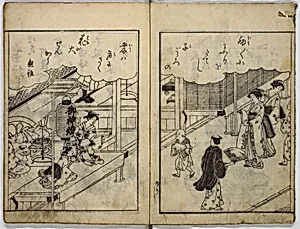
Medium
Ink on paper
Dimensions
8 1/2 x 6 in. (21.6 x 15.2 cm)
Classification
Illustrated Books
Culture & Period
Japan · Edo period (1615–1868)
Department
Asian Art
Museum
Metropolitan Museum of Art, New York, NY
Credit
Bequest of W. Gedney Beatty, 1941
Accession Number
JIB155
Rights
Public Domain
Tags
Art Historical Context
"Instructions on Ethics" is a captivating illustrated book from Japan's Edo period (1615–1868), a time of relative peace and cultural flourishing under the Tokugawa shogunate. Created by an unidentified artist using ink on paper, this compact work measures just 8½ x 6 inches, suggesting it was designed for personal study or discreet reference—perhaps carried in a sleeve like a pocket guide to moral conduct. Housed in the Metropolitan Museum of Art's Art Department, it entered the collection through the 1941 bequest of W. Gedney Beatty. The title hints at its didactic purpose, likely imparting ethical lessons through vivid illustrations featuring boys, women, and fans. Fans (sensu) held symbolic weight in Edo culture, often representing elegance, status, or even veiled messages in social interactions. Scenes of boys and women may illustrate Confucian-inspired virtues, gender roles, or everyday etiquette, common in period literature aimed at educating the rising merchant and samurai classes amid urban Japan's vibrant print culture. Artistically, the ink-on-paper medium showcases precise brushwork typical of Japanese illustration, blending text and image in a harmonious scroll or album format. This rare survivor offers a window into Edo moral philosophy, reminding us how art served as both entertainment and ethical compass in daily life.