
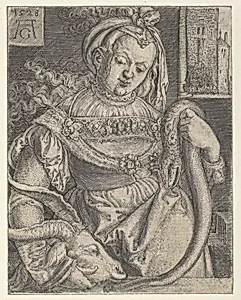
Intemperance, from Vice and Virtues
Medium
Engraving
Dimensions
Sheet: 3 1/4 × 2 1/2 in. (8.2 × 6.4 cm)
Classification
Prints
Department
Drawings and Prints
Museum
Metropolitan Museum of Art, New York, NY
Credit
Harris Brisbane Dick Fund, 1917
Accession Number
17.3.1376
Rights
Public Domain
Tags
Art Historical Context
**Intemperance, from and Virtues** *Heinrich Aldegrever, 1528* Engraving, 3 1/4 × 2 1/2 in. (8.2 × 6.4 cm) The Metropolitan Museum of Art, Brisbane Dick Fund, 1917 Heinrich Aldegrever, a masterful German engraver of the Northern Renaissance, crafted this petite engraving in 1528 as part of his *Vice and Virtues*. Active during the early Reformation era in Soest, Aldegrever was one of the "Little Masters," renowned for their intricate small-scale prints that rivaled painting in detail. This work embodies the period's moral fervor, contrasting human vices like intemperance—excess in drink or indulgence—with virtuous ideals, a theme echoing medieval allegories and Christian teachings amid religious upheaval. The engraving medium shines here: Aldegrever's precise burin work on a copper plate allowed for exquisite lines and textures, making complex narratives accessible through affordable prints. At just over three inches tall, it packs symbolic punch—likely featuring women entangled with animals and serpents, evoking temptation and sin. Serpents, biblical symbols of deceit, heighten the cautionary tale, urging viewers toward temperance. These tiny treasures democratized art, circulating moral lessons across Europe. Spot Aldegrever's virtuosity in the MET's Prints collection, where 16th-century ingenuity meets timeless ethical reflection.
About the Artist
Heinrich Aldegrever · 1502–1561
Heinrich Aldegrever, born in 1502 in Paderborn, Westphalia, to parents Herman and Katherine Trippenmeker—a family of clog-makers known by the dialect name Trippenmecker—emerged as a multifaceted artist in the German Renaissance. His early training remains undocumented, though he likely apprenticed in a Soest goldsmith's workshop after relocating there around 1525, where he joined the painters' gui...