
Izebel en koning Achab
1515 - 1519
Medium
paper
Dimensions
240; 170
Rights
Public Domain
About this artwork
height 240 mm x width 170 mm
Art Historical Context
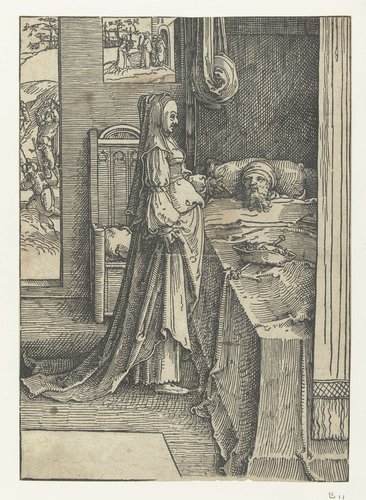
**Izebel en koningab** is a captivating engraving by Lucas van Leyden, one the Northern Renaissance's most innovative masters, created between 1515 and1519. This small work on paper, measuring just 240 mm high by 170 mm wide, depicts the biblical drama from the Book of Kings, where the scheming Queen Jezebel conspires with King Ahab to Naboth's vineyard. Leyden, a Dutch prodigy who began engraving at age nine, masterfully captures the tension of moral corruption through intricate line work, a hallmark of his style blending Flemish detail with emerging Italian influences. Printed on paper, this medium allowed for precise, reproducible artistry that brought religious narratives to a wide audience during the early 16th century—a time of religious upheaval before the Reformation. Van Leyden's technique shines in his fine cross-hatching and expressive figures, making the intimate format feel monumental. As a key piece in his biblical series, it exemplifies how Northern artists used prints to explore human vice and divine justice, influencing later engravers like Albrecht Dürer. Visitors will appreciate its rarity and narrative depth; such works adorned homes and sparked contemplation on power and piety in Renaissance Europe. A testament to van Leyden's genius, it invites us to ponder timeless ethical dilemmas up close.
About the Artist
Lucas van Leyden · 1484–1533
Lucas van Leyden (1494–1533) was a Dutch painter and printmaker who stands among the greatest engravers of the Northern Renaissance. Born in Leiden as either Lucas Hugensz or Lucas Jacobsz, he lived and worked primarily in his native city, achieving international renown that rivaled the German master Albrecht Dürer. Lucas van Leyden revolutionized Netherlandish printmaking and was among the first...