
Jackal
Unknown Artist
664–30 B.C.
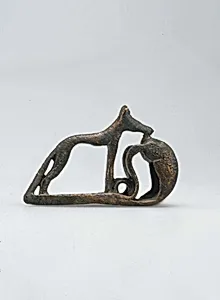
Medium
Cupreous metal
Dimensions
L. 5.1 × W. 1.1 × H. 3.3 cm (1 5/16× 7/8 × 7/8 in.)
Classification
Figurine, jackal
Period
Late Period–Ptolemaic Period
Department
Egyptian Art
Museum
Metropolitan Museum of Art, New York, NY
Credit
Gift of Lily S. Place, 1923
Accession Number
23.6.6
Rights
Public Domain
Tags
Art Historical Context
This petite figurine, titled *Jackal*, hails from Egypt's Late Period to Ptolemaic era (664–30 B.C.), a time when ancient traditions blended with Hellenistic influences under Ptolemaic rule. Crafted from cupreous metal—a copper-based alloy prized for its durability and golden sheen—this 5.1 cm long sculpture captures the sleek form of a jackal in exquisite detail. Donated to the Metropolitan Museum of Art in 1923 by Lily S. Place, it exemplifies the fine metalwork of Egyptian artisans, who often cast such small objects using lost-wax techniques to create lifelike animal forms. In ancient Egyptian culture, jackals held profound symbolic power, linked to Anubis, the god of embalming and the afterlife, who was depicted with a jackal head. These figurines likely served as votive offerings, amulets, or tomb guardians, invoking protection and divine favor. The compact size suggests it was portable, perhaps worn or placed in shrines, reflecting everyday devotion amid grand temple rituals. Today, *Jackal* invites us to ponder the enduring reverence for nature's scavengers in a civilization obsessed with eternity. Its subtle craftsmanship highlights how even humble metals preserved sacred stories for millennia. (198 words)