
James I
1551 to 1600
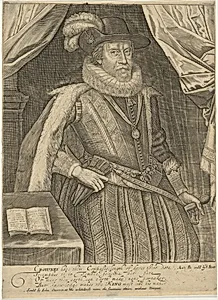
Medium
engraving
Dimensions
sheet: 30 × 22.1 cm (11 13/16 × 8 11/16 in.)
Classification
Department
CG-E
Museum
National Gallery of Art, Washington, D.C.
Credit
Rosenwald Collection
Accession Number
1951.11.60
Rights
Public Domain
Art Historical Context
This exquisite engraving, titled *James I* and created after the Flemish artist Hieronymus Wierix (1553–1619), dates to the late16th century (1551–1600). Wierix, part of Antwerp's renowned family of engr, was celebrated for his intricate reproductive prints that faithfully captured designs by leading painters. Measuring 30 × 22.1 cm, this work likely depicts James VI of Scotland (later James I of England, r. 1567–1625) during his early reign, showcasing the period's fascination with royal portraiture to assert authority and lineage. Engraving, the medium here, was a revolutionary technique in Renaissance Europe, allowing for precise, reproducible images with fine lines and rich tonal effects achieved through burin work on copper plates. Wierix's style exemplifies this mastery—delicate hatching and cross-hatching create lifelike depth and texture, making elite imagery accessible beyond paintings. Prints like this were vital for disseminating monarchs' likenesses across courts and collections. Housed in the National Gallery of Art's Rosenwald Collection (Department CG-E), *James I* reflects the cultural power of printmaking in the Elizabethan and Jacobean eras, bridging art and politics. Visitors will appreciate its technical finesse, a window into how engravings shaped public perceptions of power.