
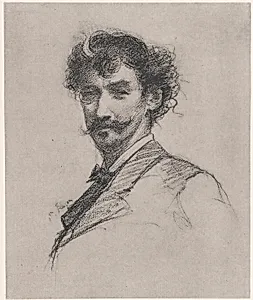
James McNeill Whistler
Medium
Photolithograph on tan paper
Dimensions
Sheet: 9 3/4 × 8 1/16 in. (24.7 × 20.5 cm)
Classification
Prints
Department
Drawings and Prints
Museum
Metropolitan Museum of Art, New York, NY
Credit
Harris Brisbane Dick Fund, 1917
Accession Number
17.3.665
Rights
Public Domain
Tags
About this artwork
This photolithograph on tan paper by Paul Adolphe Rajon|James McNeill Whistler from ca. 1880 represents the artistic and cultural achievements of its period. Printmaking during this era served multiple functions, providing affordable art for collectors, documenting contemporary life, and demonstrating technical virtuosity. The medium allowed wide distribution, making visual culture accessible beyond elite patronage. This example showcases period craftsmanship and aesthetic sensibilities, offerin...
Art Historical Context
This evocative photolithograph, titled *James McNeill Wh* and created by French printmaker Paul Adolpheon around 1880, captures the renowned American artist in a intimate portrait on warm tan paper. Measuring just 9 3/4 × 8 1/16 inches, this compact print exemplifies the late 19th-century of photography and lithography, technique known as photolithography. By transferring photographic images onto lithographic stones, artists like Rajon could produce detailed, reproducible works that mimicked the nuances of drawings or paintings, bridging traditional craftsmanship with emerging technology. James McNeill Whistler, celebrated for his Aesthetic movement paintings emphasizing "art for art's sake"—such as his iconic *Arrangement in Grey and Black No.1* (often called *Whistler's Mother*)—embodies the era's cultural dynamism. Rajon's portrait not only documents Whistler's distinctive persona but also highlights printmaking's democratizing power. Affordable and widely distributable, these prints made high art accessible beyond elite collectors, preserving contemporary figures and everyday aesthetics for broader audiences. Housed in the Metropolitan Museum of Art's Drawings and Prints department (Harris Brisbane Dick Fund, 1917), this piece offers a window into Victorian-era virtuosity. It reflects how prints chronicled cultural icons, blending technical innovation with artistic legacy, and invites us to appreciate the enduring dialogue between creator and image.
About the Artist
Paul Adolphe Rajon|James McNeill Whistler · 1842–1888
Paul Adolphe Rajon (1843–1888) was a distinguished French painter and etcher renowned for his exquisite portrait prints. Born in Dijon as the youngest of three children to hairdresser Jean Marie Rajon and shop girl Caroline Jaugey, he began his artistic path early. At age 14, he apprenticed as a portrait retoucher for his brother-in-law, photographer Pierre Joseph Meurisse, in Metz. From 1859 to 1...