
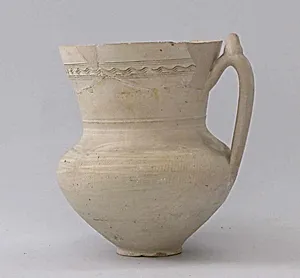
Jar
Unknown Artist
late 9th–10th century
Medium
Earthenware; slip covered and incised, unglazed
Classification
Ceramics
Department
Islamic Art
Museum
Metropolitan Museum of Art, New York, NY
Credit
Rogers Fund, 1938
Accession Number
38.40.226
Rights
Public Domain
Tags
Art Historical Context
This elegant earthenware jar, created in the late 9th to 10th century, represents a refined example of early Islamic ceramic production. Housed in the Metropolitan Museum of Art’s Department of Islamic Art, the vessel was formed from simple earthenware clay, then coated with slip—a liquid mixture of clay and water—before being incised with decorative patterns and left unglazed. This technique allowed the natural tones and textures of the clay to remain prominent, emphasizing subtle carved designs rather than colorful glazes. During this period, ceramics played a vital role in Islamic societies, serving both practical household functions and as vehicles for artistic expression. Artisans developed innovative surface treatments like slip-incising to achieve intricate motifs without relying on imported materials. The jar’s unglazed finish highlights the tactile quality of the medium, inviting viewers to appreciate the skill involved in carving directly into the slip-covered surface. Acquired by the museum through the Rogers Fund in 1938, this piece offers museum visitors a tangible connection to the everyday artistry of the Islamic world nearly a millennium ago. Its understated elegance underscores how functional objects could embody cultural sophistication and technical mastery.