
Jug
Unknown Artist
late 8th–first half 9th century
Medium
Earthenware; slip covered and incised, unglazed
Classification
Ceramics
Department
Islamic Art
Museum
Metropolitan Museum of Art, New York, NY
Credit
Rogers Fund, 1936
Accession Number
36.20.40
Rights
Public Domain
Tags
Art Historical Context
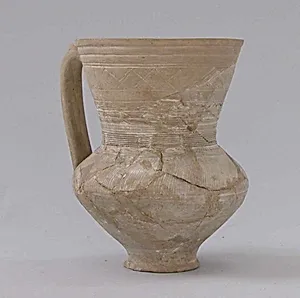
This elegant earthenware jug, created by an unknown artist between the late eighth and first half of the ninth century, offers a glimpse into the early development of Islamic ceramics. Housed in the Metropolitan Museum of Art’s Department of Islamic Art, the vessel exemplifies the period’s emphasis on subtle surface decoration rather than vibrant glazes. Its slip-covered and incised technique allowed artisans to create delicate patterns by carving through a layer of liquid clay before firing, resulting in a matte, tactile finish that highlights the material’s natural warmth. In the broader historical context of the Abbasid era, such functional objects played an important role in daily life while reflecting evolving artistic traditions across the Islamic world. The absence of glaze suggests it may have served practical purposes like storing water or oil, where porosity could help with cooling. Today, this jug stands as a testament to the ingenuity of early Islamic potters who transformed humble earthenware into objects of quiet beauty, bridging utility and craftsmanship in ways that continue to resonate with museum visitors.