
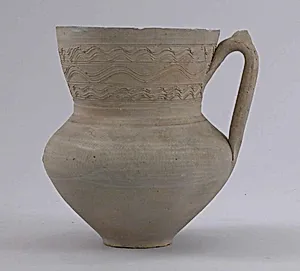
Jar
Unknown Artist
9th–10th century
Medium
Earthenware; slip covered and unglazed
Classification
Ceramics
Department
Islamic Art
Museum
Metropolitan Museum of Art, New York, NY
Credit
Rogers Fund, 1939
Accession Number
39.40.91a, b
Rights
Public Domain
Tags
Art Historical Context
This elegant earthenware jar, dating to the 9th or 10th century, offers a glimpse into the rich ceramic traditions of the early Islamic world. Housed in the Metropolitan Museum of Art’s Department of Islamic Art, the vessel was crafted using a slip-covered technique, where a layer of fine liquid clay was applied to the surface before firing. Notably unglazed, it reflects practical choices in pottery production that prioritized durability and subtle texture over the vibrant, colorful finishes seen in later Islamic ceramics. Created by an unknown artist, the jar exemplifies the utilitarian yet refined objects that circulated across trade routes and daily life in the medieval Islamic period. Slip covering allowed artisans to achieve a smoother, more uniform appearance on the earthenware body, enhancing both its aesthetic appeal and functionality for storage or serving. Such pieces highlight the innovative ceramic practices that laid the foundation for the region’s renowned pottery achievements. Acquired by the museum through the Rogers Fund in 1939, this work invites visitors to appreciate the quiet beauty of early Islamic craftsmanship. Its simple form and material choices speak to a time when ceramics balanced everyday utility with artistic expression.