
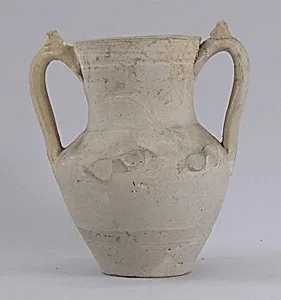
Jar
Unknown Artist
9th–10th century
Medium
Earthenware; slip covered and unglazed
Dimensions
H. 5 1/2 in. (13.9 cm) W. 4 1/2 in. (11.4 cm) D. 4 1/4 in. (10.8 cm)
Classification
Ceramics
Department
Islamic Art
Museum
Metropolitan Museum of Art, New York, NY
Credit
Rogers Fund, 1939
Accession Number
39.40.105
Rights
Public Domain
Art Historical Context
This modest yet elegant jar, crafted by an unknown artist in the9th–10th, exemplifies the refined ceramic traditions of the Islamic world during its early medieval flourishing. Standing just 5½ inches tall, with a compact width of 4½ inches and depth of ¼ inches, it was likely designed for practical use—perhaps storing spices, oils, or cosmetics in a household setting. Acquired through the Rogers Fund in 1939, it now graces the Islamic Art department at the Metropolitan Museum of Art. Made from earthenware and coated with slip—a liquid clay mixture applied before firing—this jar highlights innovative surface techniques that preceded more elaborate glazed pottery. The unglazed finish results in a tactile, matte texture, emphasizing the potter's skill in shaping and burnishing the clay for subtle sheen and durability. Slip not only sealed the porous earthenware but also allowed for potential decorative motifs, though preserved examples like this one showcase the era's focus on form and utility. In the context of Islamic ceramics, such jars reflect a cultural emphasis on beauty in everyday objects, bridging artisanal craft with aesthetic harmony. They offer a window into Abbasid-era life (circa 750–1258 CE), where pottery production thrived in centers like Iraq and Iran, influencing global traditions. A testament to anonymous mastery, this piece invites us to appreciate the quiet artistry of the past.