
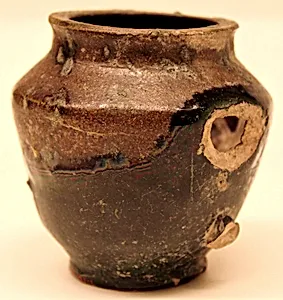
Jar
Unknown Artist
9th–10th century
Medium
Earthenware; painted in white under green and brown glaze
Dimensions
H. 3 3/16 in. (8.1 cm) Diam. 2 1/4 in. (5.7 cm) Wt. 5.7 oz. (161.6 g)
Classification
Ceramics
Department
Islamic Art
Museum
Metropolitan Museum of Art, New York, NY
Credit
Rogers Fund, 1948
Accession Number
48.101.1
Rights
Public Domain
Tags
Art Historical Context
This petite jar, crafted by an unknown artist in the 9th–10th, exemplifies the refined ceramic traditions of the Islamic world during the Abbasid era. Standing just over 3 inches tall with diameter of about 2¼ inches, it was made from earthenware and adorned with white paint beneath a green and brown glaze—a technique known as underglaze painting. This allowed for vibrant, durable designs that protected the surface while showcasing subtle color contrasts, a hallmark of early Islamic pottery production in regions like Iraq or Persia. Small jars like this one were everyday treasures, likely used to store precious oils, perfumes, spices, or cosmetics in bustling medieval households or markets. Their modest size belies their cultural importance: ceramics were a canvas for innovation in the Islamic golden age, blending functionality with artistry amid advancements in glazing technology. Acquired through the Rogers Fund in 1948, this piece now graces the Metropolitan Museum of Art's Islamic Art department, offering a tangible glimpse into a vibrant era of trade, craftsmanship, and aesthetic sophistication.