
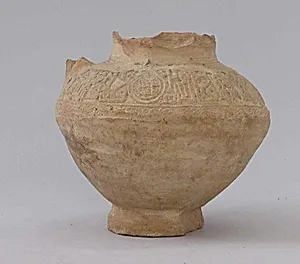
Jar
Unknown Artist
11th–12th century
Medium
Earthenware; unglazed, molded, and incised
Dimensions
H. 4 5/8 in. (11.7 cm) Diam. 4 7/8 in. (12.4 cm)
Classification
Ceramics
Department
Islamic Art
Museum
Metropolitan Museum of Art, New York, NY
Credit
Gift of George C. Miles, 1962
Accession Number
62.227.1
Rights
Public Domain
Art Historical Context
This modest yet elegant jar, crafted by an unknown artist in the 11th–12th century, exemplifies the refined ceramic traditions of the Islamic world. Housed in the Metropolitan Museum of Art's Department of Islamic Art, it measures just 4 5/8 inches tall and 4 7/8 inches in diameter, suggesting it served as a small storage vessel for spices, oils, or cosmetics in daily life. Gifted to the museum in 1962 by George C. Miles, it offers a glimpse into the artistry of a dynamic era when Islamic artisans across regions like Persia and Central Asia were innovating in pottery production. Made of unglazed earthenware, the jar was formed using molding techniques for its rounded body and flared neck, then adorned with incised decoration—lines and patterns scratched into the soft clay before firing. This labor-intensive method created subtle textures and motifs, highlighting the potter's skill without relying on colorful glazes that became more common later. Unglazed earthenware was durable and practical, prized for its earthy warmth and resistance to cracking. In the broader context of Islamic ceramics, this jar reflects a pivotal period of experimentation, bridging utilitarian craft and aesthetic expression. Its simple beauty invites us to appreciate how everyday objects carried cultural sophistication, evoking the bustling markets and skilled workshops of medieval Islamic societies.