
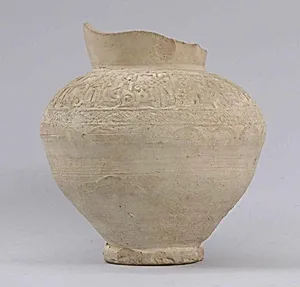
Jar
Unknown Artist
11th–12th century
Medium
Earthenware; unglazed, molded
Dimensions
H. 6 1/8 in. (15.6 cm) Diam. 5 3/4 in. (14.6 cm)
Classification
Ceramics
Department
Islamic Art
Museum
Metropolitan Museum of Art, New York, NY
Credit
Gift of George C. Miles, 1962
Accession Number
62.227.2
Rights
Public Domain
Art Historical Context
This modest yet evocative jar, crafted by an unknown artist in the11th–12th, exemplifies everyday ceramics from the Islamic world. Made of unglazed earthenware and shaped using molds, it stands just 6 1/8 inches tall with a diameter of 5 3/4 inches—perfect for practical use in households, perhaps storing spices, oils, or cosmetics. Its simple form highlights the ingenuity of Islamic potters during a golden age of cultural exchange across the Middle East, North Africa, and beyondThe molded technique allowed for efficient production and subtle decorative textures, even without glaze, relying on the natural warmth of terracotta. Unglazed earthenware like this was common in regions where resources favored durable, low-fired clay over imported glazing materials, reflecting both economic realities and aesthetic restraint. In the Metropolitan Museum of Art's Islamic Art collection—gifted by George C. Miles in 1962—this jar offers a tangible link to medieval daily life, where functionality met subtle artistry. Though unadorned, its survival speaks to the resilience of these vessels, underscoring the vital role of ceramics in Islamic trade and domestic culture during the medieval period.