
Jar
Unknown Artist
ca. 1295–1070 B.C.
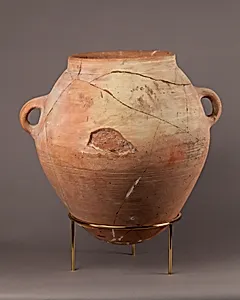
Medium
Red pottery
Dimensions
h. 46.7 cm (18 3/8 in); diam. 43 cm (16 15/16 in)
Classification
Jar
Period
New Kingdom, Ramesside
Department
Egyptian Art
Museum
Metropolitan Museum of Art, New York, NY
Credit
Rogers Fund, 1915
Accession Number
15.3.1615
Rights
Public Domain
Art Historical Context
This elegant red pottery jar hails from Egypt's New Kingdom, specifically the Ramesside period of Dynasties 19–20 (ca. 1295–1070 B.C.), a golden age of imperial power under pharaohs like Ramesses II. Standing nearly 47 cm tall and almost 43 cm wide, its substantial size suggests it served practical purposes in daily life or temple rituals, likely storing grain, oil, or wine in households, palaces, or sacred spaces. Acquired through the Rogers Fund in 1915, it now graces the Egyptian Art collection at The Metropolitan Museum of Art, offering a tangible link to ancient Nile Valley society. Crafted from red-firing clay—probably Nile silt or marl—the jar exemplifies the era's advanced pottery techniques. Potters used the fast-spinning potter's wheel to shape these vessels, achieving smooth, even walls before firing them in kilns to produce the characteristic warm red hue. Though unadorned, its simple, bulbous form reflects the functional aesthetic of Ramesside ceramics, prioritizing durability and capacity over elaborate decoration reserved for finer wares. Such jars highlight Egypt's mastery of everyday craftsmanship, underscoring the civilization's self-sufficiency and reverence for utility in both profane and divine contexts. A quiet survivor of millennia, it invites us to ponder the hands that formed it and the lives it sustained.