
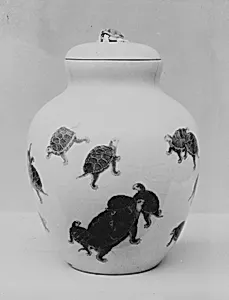
Jar and cover
Unknown Artist
1850
Medium
Porcelain decorated blue underglaze (Hirado ware)
Dimensions
H. 10 1/8 in. (25.7 cm)
Classification
Ceramics
Culture & Period
Japan · Edo period (1615–1868)
Department
Asian Art
Museum
Metropolitan Museum of Art, New York, NY
Credit
Gift of Mrs. V. Everit Macy, 1923
Accession Number
23.225.108a, b
Rights
Public Domain
Tags
Art Historical Context
This delicate **Jar and Cover** from1850 exemplifies the refined artistry of Hirado ware, a prized Japanese porcelain produced on the island of Hirado during the Edo period (16151868). Standing at 10 1/8 inches tall, this ceramic vessel features intricate blue underglaze decoration—a technique where cobalt pigment is applied to the unfired porcelain body before glazing and high-temperature firing. This method yields vibrant, durable blue motifs that resist fading, blending Japanese ingenuity with influences from Chinese porcelain traditions. Hirado ware gained fame in the 19th century for its thin, translucent porcelain and meticulous designs, often depicting auspicious symbols from nature. Here, turtles likely adorn the surface, embodying longevity and good fortune in Japanese culture, where these resilient creatures are revered in folklore and art. Crafted by an unknown artist, such pieces were exported widely, showcasing Japan's ceramic mastery amid the Edo era's cultural flourishing under the Tokugawa shogunate. Generously gifted to the Metropolitan Museum of Art in 1923 by Mrs. V. Everit Macy, this jar invites us to appreciate the quiet elegance of everyday luxury in feudal Japan—a timeless treasure from the Asian Art collection.