
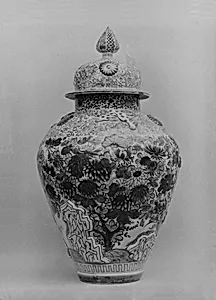
Vase with lid
Unknown Artist
18th century
Medium
Porcelain decorated with enamels (Arita ware, Imari type)
Dimensions
H. (with lid) 27 7/8 in. (70.8 cm)
Classification
Ceramics
Culture & Period
Japan · Edo period (1615–1868)
Department
Asian Art
Museum
Metropolitan Museum of Art, New York, NY
Credit
Gift of Mrs. V. Everit Macy, 1923
Accession Number
23.225.142a, b
Rights
Public Domain
Tags
Art Historical Context
This elegant vase with lid, standing an impressive 27⅞ inches tall, exemplifies the pinnacle of 18th-century Japanese porcelain from the Edo period (1615–1868). Produced in Arita, Saga Prefecture—the birthplace of Japan's porcelain industry—this Imari-type piece is decorated with vibrant enamels, a technique that allowed artisans to apply colorful overglaze designs fired at lower temperatures for lasting brilliance. Floral motifs, a hallmark of Imari ware, likely adorn its surface, celebrating nature's beauty in bold reds, blues, and golds. Arita ware revolutionized Japanese ceramics during the Edo era, when soft-paste porcelain, inspired by Chinese imports, was perfected using local kaolin clay. Imari style, named after the port of export, gained international fame through Dutch traders, influencing European porcelain like Meissen. These vases were prized for both domestic display and export, symbolizing wealth and refined taste. A generous gift to the Metropolitan Museum of Art in 1923 by Mrs. V. Everit Macy, this anonymous masterpiece highlights Japan's Edo-era export artistry, blending technical innovation with cultural elegance. Visitors, imagine it gracing a shogun's alcove or a European cabinet of curiosities!