
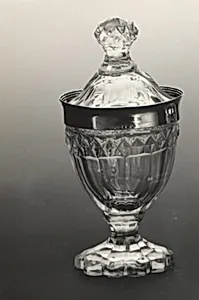
Jar and cover
Medium
glasswares
Classification
glasswares
Department
Smithsonian Collection
Museum
Smithsonian American Art Museum
Credit
Bequest of Walter Phelps Warren
Accession Number
1986-61-101-a,b
Rights
Public Domain
About this artwork
Research in Progress
Art Historical Context
**Jar and Cover** *Henry Chawner (British, 1764–1851), ca. 1795* Glassware, Smithsonian American Art Museum; Bequest of Walter Phelps Warren Crafted around 1795 by Henry Chawner, a skilled British glassmaker during the late Georgian era, this elegant *Jar and Cover* represents the refined artistry of English glass production at the turn of the 19th century. Chawner, active in London, contributed to a vibrant tradition of glasswares that blended functionality with decorative appeal, often used for storage, apothecary needs, or display in affluent homes. The piece's simple yet sophisticated form—a covered jar—highlights the era's emphasis on practical luxury, when British glassmakers excelled in clear, durable vessels suited to everyday refinement. In the 1790s, Britain led in glass innovation, building on 17th-century lead crystal techniques that produced brilliant, resonant material ideal for tableware and decorative objects. Though research on this specific jar is ongoing, its presence in the Smithsonian American Art Museum underscores its value as a preserved example of transatlantic cultural exchange, acquired through the generous bequest of collector Walter Phelps Warren. Visitors can appreciate how such unassuming glasswares captured the neoclassical taste for symmetry and clarity, bridging utility and subtle beauty in everyday life.