
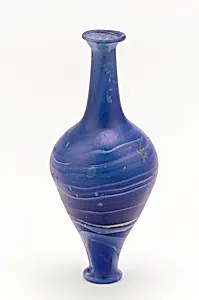
Jar
100 B.C.-100 A.D.
Medium
Decorative Arts-Glass
Classification
Decorative Arts-Glass
Department
Smithsonian Collection
Museum
Smithsonian American Art Museum
Credit
Smithsonian American Art Museum, Gift of John Gellatly
Accession Number
1929.8.147.16
Rights
Public Domain
Art Historical Context
This elegant glass jar, dating from 100 B.C. to 100 A.D., hails from the late Hellenistic or early Roman period, a time when glassmaking blossomed across the Mediterranean world. Crafted by an unidentified artisan, it exemplifies the decorative arts tradition, where glass transitioned from luxury imports to more accessible household wares. Its presence in the Smithsonian American Art Museum's collection, gifted by John Gellatly, highlights the enduring appeal of ancient craftsmanship in American collections. Glass production during this era marked a technological leap, with techniques like core-forming or early free-blowing allowing for translucent, lightweight vessels that rivaled pottery or metal in beauty and utility. Jars like this one were likely used for storing oils, perfumes, or cosmetics, blending everyday function with subtle artistry—perhaps featuring iridescent surfaces from natural weathering over centuries. Visitors will appreciate how this unassuming jar bridges ancient innovation and modern wonder, whispering of bustling Roman workshops and the daily lives of people two millennia ago. A testament to human ingenuity, it invites us to marvel at the delicate permanence of glass.
About the Artist
Unidentified ( ) · –