
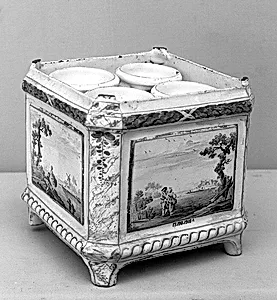
Jardinière
ca. 1753–95
Medium
Faience (tin-glazed earthenware)
Dimensions
Overall: 5 1/8 × 5 1/4 × 5 1/4 in. (13 × 13.3 × 13.3 cm)
Classification
Ceramics-Pottery
Culture
French, Sceaux
Department
European Sculpture and Decorative Arts
Museum
Metropolitan Museum of Art, New York, NY
Credit
Gift of J. Pierpont Morgan, 1917
Accession Number
17.190.1918a, b
Rights
Public Domain
Tags
Art Historical Context
This delightful *Jardinière*, a small planter crafted around 1753–95 at the renowned Sceaux faience manufactory in France, showcases the work of painter Fidelle Duvivier. Made of tin-glazed earthenware, or *faience*, it exemplifies the medium's popularity in 18th-century Europe. The tin glaze created a smooth, white surface ideal for vibrant polychrome decoration, allowing artisans like Duvivier to apply intricate hand-painted designs fired at low temperatures. Sceaux faience, produced under royal patronage during the Louis XV era, rivaled porcelain imports with its affordable luxury and playful motifs. Adorned with trees, boats, and human figures, the jardinière likely depicts an idyllic pastoral or river scene, capturing the Rococo taste for nature-inspired whimsy and leisure. These motifs reflect France's cultural fascination with *fêtes galantes*—elegant outdoor gatherings—often seen in ceramics for the home. Measuring just over 5 inches across, this intimate piece was perfect for tabletop display in fashionable interiors. A gift to the Metropolitan Museum of Art from J. Pierpont Morgan in 1917, it preserves Sceaux's legacy of technical innovation and artistic flair in European decorative arts.