
Javelin or Spear
Unknown Artist
18th century
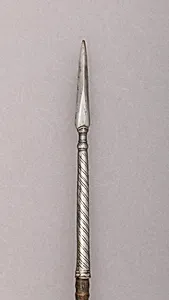
Dimensions
L. 72 3/4 in. (184.8 cm); L. of head 9 5/8 in. (24.4 cm); W. 3/4 in. (1.9 cm); Wt. 1 lbs. 5.6 oz. (612.3 g)
Classification
Shafted Weapons
Culture
Indian
Department
Arms and Armor
Museum
Metropolitan Museum of Art, New York, NY
Credit
Gift of William H. Riggs, 1912
Accession Number
12.147
Rights
Public Domain
Art Historical Context
This elegant 18th-century j, or spear, from India exemplifies the masterful craftsmanship of South Asian arms makers, now housed in the Metropolitan Museum of Art's Arms and Armor. Measuring an impressive 72¾ inches (184.8 cm) in total length—with a substantial 9⅝-inch (24.4 cm) head, ¾-inch (1.9 cm) width, and weighing 1 lb. 5.6 oz. (612.3 g)—it was designed for both thrusting and throwing in battle or hunting. Gifted by William H. Riggs in 1912, this shafted weapon reflects the technical prowess of Indian metallurgists, who balanced form and deadly function in their designs. In the turbulent 18th century, as the Mughal Empire waned and regional powers like the Marathas and Rajputs rose, such weapons were essential for cavalry charges and infantry skirmishes across the subcontinent. Javelins like this one highlight India's rich martial traditions, where arms were not merely tools of war but symbols of status and skill. The sleek proportions suggest a weapon wielded by skilled warriors, optimized for speed and penetration. Though the artist remains unknown, this spear invites visitors to ponder the artistry in everyday lethality—its enduring presence in the Met collection a testament to the cultural sophistication of Indian weapon-making.