
Jean d'Albon de Saint-André (1472–1549)
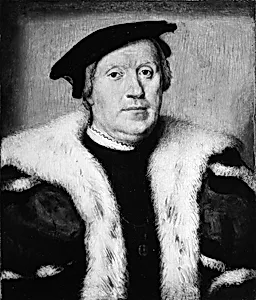
Medium
Oil on wood
Dimensions
6 7/8 x 5 3/4 in. (17.5 x 14.6 cm)
Classification
Paintings
Department
European Paintings
Museum
Metropolitan Museum of Art, New York, NY
Credit
The Friedsam Collection, Bequest of Michael Friedsam, 1931
Accession Number
32.100.103
Rights
Public Domain
Tags
Art Historical Context
This intimate portrait by Corneille de Lyon Jean d'Albon de Saint-André (1472–1549), a prominent French nobleman during the Renaissance. Painted in oil on wood, the small panel measures just 6 7/8 x 5 3/4 inches, making it a quintessential example of the artist's specialty: highly detailed, miniature likenesses of European aristocracy. Now housed in the Metropolitan Museum Art as part of The Friedsam Collection, it captures the elegance of 16th-century portraiture. Corneille de Lyon a Netherlandish painter active in Lyon, France, from around the 1530s to 1570s, mastered the technique of rendering lifelike faces with an enamel-like polish on wood panels. These works were prized for their precision and jewel-like quality, often commissioned for private collections rather than public display. The unknown date places it within his mature period, reflecting the era's fascination with individualized portraiture amid the French court's cultural flourishing under kings like Francis I. Jean d'Albon's stern gaze and period attire evoke the world of Renaissance nobility, where such portraits served as status symbols and personal mementos. This piece highlights how small-scale oils democratized elite portraiture, bridging Northern European detail with French sophistication.
About the Artist
Corneille de Lyon · 1533–1575
Corneille de Lyon, born around 1500 in The Hague in the Netherlands, emerged as one of the premier portraitists of the French Renaissance after settling in Lyon by 1533. A Netherlandish artist who became naturalized as a French citizen in 1547, he quickly rose in prominence, serving as official painter to the Dauphin (later Henry II) from around 1540 and continuing under Henry II and Charles IX as...