
Jean-Louis-André-Théodore Gericault (1791–1824)
probably 1822 or 1823
Medium
Oil on canvas
Dimensions
18 5/8 x 15 1/8 in. (47.3 x 38.4 cm)
Classification
Paintings
Department
European Paintings
Museum
Metropolitan Museum of Art, New York, NY
Credit
Purchase, Gift of Joanne Toor Cummings, by exchange, 1998
Accession Number
1998.84
Rights
Public Domain
Tags
Art Historical Context
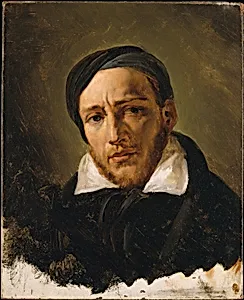
This intimate oil-on-canvas portrait by Horace Vernet captures Jean-Louis-André-Thodore Géricault (1–1824), a towering figure of French Romanticism, likely painted in 1822 or 1823. Géricault, best known for his dramatic masterpiece *The Raft of the Medusa* (9), revolutionized art with his raw depictions of human suffering, heroism, and the sublime, challenging the polished Neoclassicism of era. Vernet, a fellow Romantic painter celebrated for dynamic military scenes and portraits, here renders his contemporary in a modest 18⅝ × 15⅛-inch format, suggesting a personal or studio setting rather than a grand commission. The work's historical significance lies in its timing: executed just before Géricault's untimely death at age 32 from tuberculosis, it offers a rare glimpse into the artist's final years amid France's post-Napoleonic cultural ferment. Vernet's fluid brushwork and earthy tones—hallmarks of Romantic realism—convey intensity and introspection, aligning with Géricault's own innovative use of light and anatomy. Housed in the Metropolitan Museum of Art's European Paintings collection since 1998, this portrait not only honors a Romantic pioneer but also underscores the camaraderie among France's bold 19th-century artists.
About the Artist
Horace Vernet · 1789–1863
**Horace Vernet** (full name Émile Jean-Horace Vernet) was a leading French painter of the nineteenth century, renowned for his dynamic battle scenes, portraits, and Orientalist subjects. Born on 30 June 1789 in Paris at the Louvre during the French Revolution, he came from a distinguished artistic dynasty. He was the son of the equestrian and military painter Carle Vernet and the grandson of the ...