
Joel Barlow
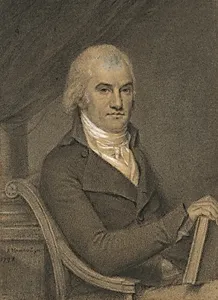
Medium
Drawing
Classification
Drawing
Department
Smithsonian Collection
Museum
Smithsonian American Art Museum
Credit
National Portrait Gallery, Smithsonian Institution; gift of Mr. and Mrs. Joel Barlow
Accession Number
NPG.76.31
Rights
Public Domain
Tags
Art Historical Context
In 1798, American artist John Vanderlyn created this intimate portrait drawing of Joel Barlow, a multifaceted figure of the early American Republic. Vanderlyn, known for his Neoclassical style influenced by his later studies in Paris, captures Barlow with classical elements like a column and draped fabric, evoking the grandeur of antiquity and underscoring the subject's intellectual stature. As a drawing—likely preparatory or standalone—this work highlights Vanderlyn's skill in rendering form and expression with graphite or ink on paper, a medium prized for its immediacy and detail in portraiture. Joel Barlow (1754–1812) embodied the Enlightenment spirit: poet, writer, lawyer, journalist, and diplomat. His epic poem *The Vision of Columbus* championed American independence, while his role as a minister to France during the Revolution reflected his progressive ideals. Gifted to the National Portrait Gallery by Barlow's descendants, this piece from the Smithsonian American Art Museum offers a glimpse into the cultural elite of post-Revolutionary America, where portraits like this celebrated leaders shaping a new nation. Vanderlyn's early career piece not only documents Barlow but also bridges American art with European traditions, making it a gem for visitors exploring the roots of U.S. identity.