
Johan Frederik de Grootmoedige
1543
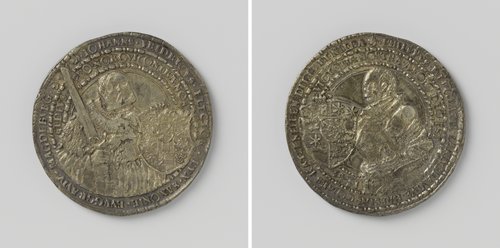
Medium
striking (metalworking)
Dimensions
5.2; 53.53
Rights
Public Domain
About this artwork
diameter 5,2 cm x gewicht 53,53 gr
Art Historical Context
Behold the exquisite struck medal *Johan Frederik de Grootedige* (John Frederick the Magnanimous crafted anonymously in 1543. just 5.2 cm in diameter weighing 53.53, this small yet masterful piece of Renaissance metalworking captures the likeness of John Frederick I, Elector Saxony—a pivotal Protestant leader during the Reformation. Struck medals like this were prized Renaissance innovations, blending the precision of coin-making with portraiture to honor rulers and commemorate their legacies. Created amid the religious upheavals of 16th-century Europe, the medal reflects the era's fascination with individualized portrait medals, popularized in Italy and spreading northward. John Frederick, known for his steadfast defense of Lutheranism against Emperor Charles V, earned his epithet "the Magnanimous" for his bold patronage of reformers like Martin Luther. This artifact likely served as a token of allegiance or personal devotion, its intimate scale making it ideal for wearing or collecting. The striking technique—hammering a die into softened metal—ensures fine details endure, showcasing anonymous artistry from the Low Countries or German regions. Though the maker remains unknown, such works highlight metalworking's role in disseminating political and cultural icons, bridging art and propaganda in a turbulent age. A testament to Reformation resilience, it invites us to ponder the faces behind history's turning points.
About the Artist
anonymous
In the vast tapestry of art history, "Anonymous" stands not as a singular individual but as a collective designation for countless unidentified creators whose works have endured across millennia. These artists, spanning prehistoric cave painters to medieval illuminators and folk craftsmen, produced the foundational layers of human visual culture. Prior to the Renaissance, when individual fame emer...