
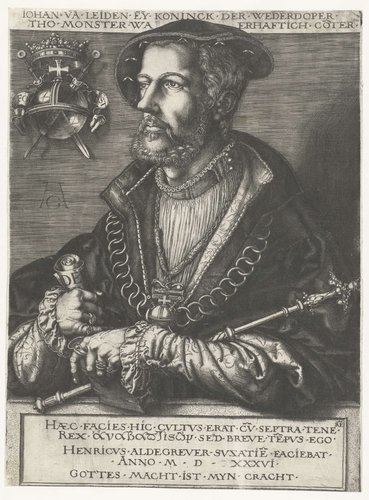
Johan van Leiden eyn koninck der Wederdoper tho monster waerhaftich conter
Medium
engraving
Dimensions
226; 308
Rights
Public Domain
About this artwork
verzamelaarsmerk, verso linksonder, gestempeld: Lugt 240
Art Historical Context
### Johan van Leiden, King of the Anabapt at Münster: A True Likeness Created in 1536 by Heinrichegrever, a German engraver from Soest known as one of the "Little Masters of the Northern Renaissance, this striking engraving (308 × 226 mm) captures John of Leiden, the charismatic yet controversial leader of the Münster Anabaptists Aldegrever's precise line work and intricate details showcase the era's innovative printmaking techniques, allowing images like this to spread widely across Europe via affordable reproductions. The artwork depicts John (Jan Beuckelszoon) during the dramatic Münster Rebellion of 1534–1535, when radical Anabaptists seized the city, proclaiming a new kingdom with John as their crowned prophet-king. Amid prophecies, polygamy, and communal living, the uprising ended in a brutal siege by Protestant and Catholic forces. Produced just a year later, Aldegrever's print—titled in Low German as a "true counterfeiter" (waerhaftich conter)—serves as potent propaganda, mocking the fallen leader and warning against religious extremism. Bearing a collector's mark (Lugt 240) on the verso, this piece highlights engraving's role in shaping public opinion during the Reformation. It invites us to reflect on how art fueled ideological battles, blending sharp satire with historical witness.
About the Artist
Heinrich Aldegrever · 1502–1561
Heinrich Aldegrever, born in 1502 in Paderborn, Westphalia, to parents Herman and Katherine Trippenmeker—a family of clog-makers known by the dialect name Trippenmecker—emerged as a multifaceted artist in the German Renaissance. His early training remains undocumented, though he likely apprenticed in a Soest goldsmith's workshop after relocating there around 1525, where he joined the painters' gui...