
John Barleycorn
ca. 1761
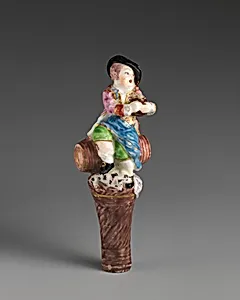
Medium
Soft-paste porcelain
Dimensions
Height: 3 1/2 in. (8.9 cm)
Classification
Ceramics-Porcelain
Culture
British, Chelsea
Department
European Sculpture and Decorative Arts
Museum
Metropolitan Museum of Art, New York, NY
Credit
Gift of Irwin Untermyer, 1964
Accession Number
64.101.651
Rights
Public Domain
Tags
Art Historical Context
Nestled in the Metropolitan Museum of Art's European Sculpture and Decorative collection, *John Barleycorn* is a charming soft-paste figure crafted by the Chelsea Porcelainufactory around 176. Standing just 3 inches tall, this delicate figure exemplifies the mid-18th British fascination with finely modeled, gifted to the museum by Irwin Untermyer in 4. Chelsea, one of England's pioneering porcelain factories (active 3–ca. 1784), in soft-paste porcelain glassy, frit-based material fired at lower temperatures than true-paste, allowing for vibrant colors and intricate details but making it more fragile. The manufactory drew inspiration from Meissen wares, producing whimsical figures from mythology, theater, and folklore. *John Barleycorn* personifies the titular character from a traditional British folk song, symbolizing the spirit of barley harvested for ale and whiskey—a nod to agrarian life and revelry in Georgian England. This petite sculpture highlights the Rococo-era delight in playful, narrative-driven decorative arts, perfect for adorning 18th-century mantelpieces. Its survival showcases Chelsea's technical prowess in capturing expressive poses and textured elements, like clothing or tools, inviting visitors to ponder the cultural rituals behind a simple drink.
About the Artist
Chelsea Porcelain Manufactory · 1744–1784
**Chelsea Porcelain Manufactory** The Chelsea Porcelain Manufactory, Britain's pioneering porcelain enterprise, was founded around 1743 in Chelsea, London, by two Huguenot silversmiths: Nicholas Sprimont from Liège and Charles Gouyn. Sprimont, trained in Paris as a goldsmith before immigrating to England, brought his expertise in luxury metalwork to the venture, while Gouyn handled early sales th...