
John C. Calhoun
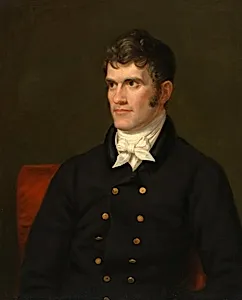
Medium
Painting
Classification
Painting
Department
Smithsonian Collection
Museum
Smithsonian American Art Museum
Credit
National Portrait Gallery, Smithsonian Institution; transfer from the National Gallery of Art; gift of the A.W. Mellon Educational and Charitable Trust, 1942
Accession Number
NPG.65.58
Rights
Public Domain
Tags
About this artwork
(Augustus F. De Forest, New York);(Keeler Galleries, New York, 4 May 1922); (Kraushaar Gallery, New York); (M. Knoedler & Co., New York); purchased 1936 by The A. W.Mellon Educational and Charitable Trust; gift 1942 to NGA; transferred 1965 to NPG.
Art Historical Context
Charles Bird King’s portrait of John C. Calhoun, painted around 1823, captures one of America’s most influential early statesmen during a pivotal period in his career. At the time, Calhoun served as Secretary of War under President James Monroe and was already known as a brilliant lawyer and political philosopher from South Carolina. The work, now part of the Smithsonian’s National Portrait Gallery collection, reflects the formal portrait tradition used to document the young nation’s leaders. King, who spent much of his career in Washington, D.C., specialized in dignified likenesses that conveyed both personal character and public role. Here, Calhoun appears seated in an interior setting, surrounded by elements such as a brass fixture and a sturdy chair that suggest authority and intellect. The painting’s straightforward composition emphasizes Calhoun’s thoughtful expression, inviting viewers to consider his complex legacy as vice president, senator, and defender of states’ rights. This work offers visitors a window into the visual culture of the early republic, when portraits served not only as records of appearance but also as statements of political identity and national ambition.