
Medium
Classification
Department
Smithsonian Collection
Museum
Smithsonian American Art Museum
Credit
National Portrait Gallery, Smithsonian Institution; gift of Mr. and Mrs. Paul Mellon
Accession Number
S/NPG.74.39.10.2
Rights
Public Domain
Tags
Art Historical Context
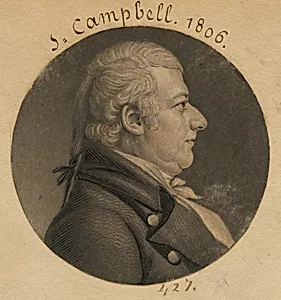
This elegant 1806 print portrays John Campbell, a prominent early American figure known as a judge, lawyer, and U.S. Congressman from Maryland. Created by French-born artist Charles Balth Julien Févret de-Mémin (1770–1852), it captures Campbell's refined profile against a simple background, emblematic of the burgeoning national identity in the young United States. Saint-Mémin, who emigrated to America during the French Revolution, became renowned for documenting the nation's elite through accessible portrait prints. Saint-Mémin's innovative technique—using a mechanical device called the physiognotrace to trace precise silhouettes, then engraving them for mass production—revolutionized portraiture. This method made high-quality likenesses affordable, democratizing portraiture beyond oil paintings reserved for the wealthy. Produced during Thomas Jefferson's presidency, the work reflects a neoclassical emphasis on clarity and dignity, honoring Campbell's contributions to Federalist politics and the judiciary amid America's post-Revolutionary growth. Housed in the Smithsonian American Art Museum as a gift from Mr. and Mrs. Paul Mellon, this print offers a window into early 19th-century American society, where such images preserved the faces of leaders shaping the republic.