
John Jay
Medium
Classification
Department
Smithsonian Collection
Museum
Smithsonian American Art Museum
Credit
National Portrait Gallery, Smithsonian Institution
Accession Number
NPG.75.58
Rights
Public Domain
Tags
Art Historical Context
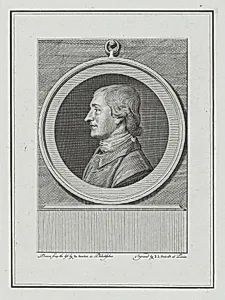
This striking 1780 print by French engraver Benoît-Louis Prévost captures John Jay during a pivotal moment in American history. Created while Jay served as a diplomat and president of the Continental Congress, the portrait reflects the young nation’s need to project leadership and legitimacy abroad. Prévost, active in Paris, likely produced the work to circulate Jay’s image among European allies at a time when the outcome of the Revolutionary War remained uncertain. As a print rather than a unique painting, the work allowed for wider distribution of Jay’s likeness. Such engravings played an essential role in shaping public perception of America’s founders, reaching audiences far beyond those who could view an original canvas. The medium’s reproducibility made it both practical and influential in the 18th century. Jay’s distinguished career—as lawyer, New York statesman, and eventually the first Chief Justice of the United States—is subtly conveyed through the dignified pose typical of formal portraiture. Today, this Smithsonian-held impression preserves not only Jay’s features but also the international interest surrounding the birth of the American republic.