
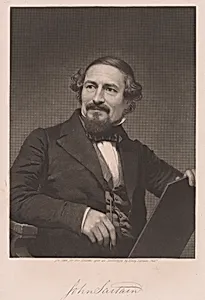
John Sartain Self-Portrait
Medium
Classification
Department
Smithsonian Collection
Museum
Smithsonian American Art Museum
Credit
National Portrait Gallery, Smithsonian Institution
Accession Number
S/NPG.80.66
Rights
Public Domain
Tags
Art Historical Context
Step into the world of 19th-century American printmaking with *John Sartain Self-Portrait* (1861), a compelling engraving created by the artist himself. Born in 1808 and living until 1897,ain was a master engraver, magazine editor, and dedicated abolitionist. This self-portrait, housed in the Smithsonian American Art Museum's collection from the National Portrait Gallery captures him at the height his career, seated in an interior setting with a chair, bowtie, and signature mustache—hallmarks of Victorian-era formality. The print showcases Sartain's prowess with the engraving tool, prominently featured as a nod to his primary medium. Engraving was revolutionary in the mid-1800s, allowing detailed reproductions of portraits and illustrations for widespread dissemination through magazines like his own *Sartain's Union Magazine of Literature and Art*. Created amid the Civil War's outbreak, it reflects a time when visual art played a key role in shaping public opinion, especially for figures like Sartain who championed abolition. This intimate self-portrait not only celebrates the engraver's technical skill—evident in its fine lines and textures—but also humanizes a multifaceted artist whose work bridged art, publishing, and social reform. A window into antebellum America, it invites us to appreciate how one man's image embodied the era's creative and moral fervor.