
Johnathan Trumbull
ca. 1792
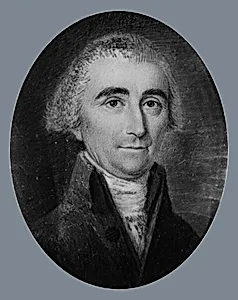
Medium
Watercolor on ivory
Dimensions
Sight: 2 x 1 5/8 in. (5.1 x 4.1 cm)
Classification
Painting, miniature
Culture
American
Department
The American Wing
Museum
Metropolitan Museum of Art, New York, NY
Credit
Fletcher Fund, 1938
Accession Number
38.146.14
Rights
Public Domain
Tags
Art Historical Context
Step into the intimate world of early American portraiture with James Peale's *Johnathan Trumbull*ca. 1792), a delicate watercolor on ivory miniature measuring just 2 x 1 5/8 inches. Crafted by James Peale a master miniaturist from the illustrious Peale family of artists—including his brother Charles Willson Pe—this tiny gem captures the stern yet dignified likeness of Jonathan Trumbull Connecticut's Revolutionary War governor and the only colonial leader to serve both as a colonial and state governor. Displayed in The Metropolitan Museum of Art's American Wing, it reflects the post-Independence era's pride in national heroes. Watercolor on ivory was the gold standard for 18th-century miniatures, prized for its luminous translucency and ability to render fine details like Trumbull's powdered wig, lace cravat, and piercing gaze on the smooth, enamel-like surface. These pocket-sized portraits, often worn as lockets or kept in cases, served as personal talismans—tokens of remembrance for family, friends, or sweethearts amid a young nation's uncertainties. Peale's precise technique highlights his skill in the American neoclassical style, blending European refinement with emerging Yankee realism. This artwork offers a window into 1790s America: a time of fragile republic-building, where such miniatures preserved the faces of founders for posterity. A testament to artistry and history in your palm!
About the Artist
James Peale · 1749–1831
James Peale was an American painter born in 1749, the younger brother of the more famous Charles Willson Peale, and a member of one of the most remarkable artistic families in the history of American art. Trained largely by his brother, James worked for many years in Charles Willson's shadow, assisting with portraits and miniatures in the Philadelphia studio before developing his own independent p...