
Medium
Classification
Department
Smithsonian Collection
Museum
Smithsonian American Art Museum
Credit
National Portrait Gallery, Smithsonian Institution; gift of Mr. and Mrs. Paul Mellon
Accession Number
S/NPG.74.39.9.9
Rights
Public Domain
Tags
Art Historical Context
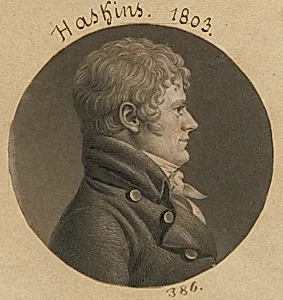
Step into the early 19th-century world of American finance with this elegant profile portrait of Joseph Hins, a prominent banker, created by French émigré artist Charles Bazar Julien Févret Saint-Mémin in1803. Saint-Mémin, who fled the French Revolution and settled in the United States, became renowned for precise, miniature profile likenesses of the nation's elite, capturing the poise and ambition of the young republic's leaders. Rendered as a print, this work exemplifies Saint-Mémin's innovative "physiognotrace" technique—a mechanical pantograph device that traced a sitter's silhouette onto paper, which he then engraved and hand-colored for vivid detail. These affordable yet sophisticated portraits democratized fine art, serving as status symbols for bankers, politicians, and merchants like Haskins during America's formative years after independence. Housed in the Smithsonian American Art Museum, thanks to the generosity of Mr. and Mrs. Paul Mellon, this piece offers a window into the era's emerging financial class and the fusion of European artistry with New World identity. It's a testament to how portraiture preserved personal legacies in a rapidly changing nation.