
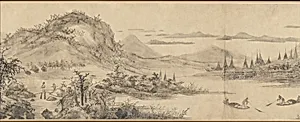
明 王紱 江山漁樂圖 卷|Joys of the Fisherman
ca. 1410
Medium
Handscroll; ink on paper
Dimensions
Image: 10 5/8 x 22 ft. 7 1/8 in. (27 x 688.7 cm) Overall with mounting: 10 15/16 in. x 38 ft. 3 11/16 in. (27.8 x 1167.6 cm)
Classification
Paintings
Culture & Period
China · Ming dynasty (1368–1644)
Department
Asian Art
Museum
Metropolitan Museum of Art, New York, NY
Credit
Ex coll.: C. C. Wang Family, Edward Elliott Family Collection, Purchase, The Dillon Fund Gift, 1982
Accession Number
1982.2.3
Rights
Public Domain
Tags
Art Historical Context
Wang Fu’s “Joys of the Fisherman,” created around 1410 during the early Ming dynasty, offers a sweeping vision of riverside life rendered in ink on paper. This exceptionally long handscroll—nearly twenty-three feet in length—invites viewers to unroll the scene gradually, following fishermen in small boats as they drift through misty mountains and tranquil waters. The format itself, a hallmark of Chinese painting, transforms the viewing experience into a quiet journey, encouraging contemplation rather than a single glance. In Ming China, images of fishermen often carried deeper meaning, evoking the scholar’s ideal of withdrawing from official life to find harmony with nature. Wang Fu employs delicate ink washes and varied brushstrokes to suggest distant peaks, rippling water, and simple dwellings along the shore. The absence of bright color heightens the poetic mood, allowing the interplay of light and shadow to convey both vast space and intimate moments of daily labor. Today housed in the Metropolitan Museum of Art, the scroll remains a vivid reminder of how Ming artists used landscape to explore themes of freedom, resilience, and the enduring appeal of a life lived close to the water.